
Calendar Search Results: peak r d
March 27, 1976 Gary Wright's big hit "Dream Weaver" reaches its US chart peak of #2. The song is inspired by the writing of Paramahansa Yogananda.
January 3, 1976 American interest in The Bay City Rollers peaks as their song "Saturday Night" hits #1 for one week, which is good enough to get their faces on cereal boxes.
March 29, 1975 Labelle's "Lady Marmalade" hits #1 in America as listeners track down French speakers to translate the line, "Voulez-vous coucher avec moi ce soir." ("Do you want to sleep with me tonight?")
April 25, 1974 The streaking fad hits its peak as Rolling Stone reports that Yes and Gregg Allman concerts have been interrupted by naked people running around the venues.
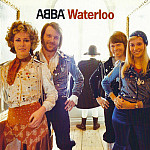 April 6, 1974 ABBA become European stars overnight when their composition "Waterloo" wins the annual Eurovision Song Contest.More
March 23, 1974 Hall & Oates' "She's Gone" peaks at #60 on the Hot 100. Later that year, a version by Tavares hits #50, and in 1976, the original goes to #7 when it is re-released. The duo were each dealing with girl problems when they wrote the song together.
February 23, 1974 Aretha Franklin becomes the first artist to have songs peak at each of the first 10 spots on the Hot 100 when "Until You Come Back To Me (That's What I'm Gonna Do)" fills in the gap at #3.
 December 25, 1973 The Sting, a crime caper starring Paul Newman and Robert Redford as con men in 1930s Chicago, debuts in theaters. With Scott Joplin's "The Entertainer" as its theme, the film's soundtrack goes to #1 and revives the ragtime genre.More
August 26, 1973 Neil Young and the Santa Monica Flyers record "Mellow My Mind," "Speakin' Out," "World on a String," "Tired Eyes," and "Tonight's the Night." All five recordings are included on the final cut of Tonight's the Night.
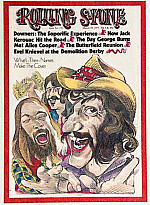 March 29, 1973 Dr. Hook & The Medicine Show, who have a hit with "The Cover Of 'Rolling Stone'," appear on the cover of Rolling Stone magazine.More
 February 8, 1973 The Jamaican cult classic film The Harder They Come is released in the US.More
 June 16, 1972 David Bowie unveils his landmark album, The Rise and Fall of Ziggy Stardust and the Spiders From Mars. His breakthrough LP, it sells over 7 million copies and is hailed as one of the greatest albums of all time.More
August 28, 1971 John Denver's first hit, "Take Me Home Country Roads," peaks at #2 on the Hot 100, held back by the Bee Gees' "How Can You Mend A Broken Heart?" Denver's song, which endures as a singalong favorite, is about West Virgina, but he had never been there - the lyric was inspired by postcards his co-writer Bill Danoff received from a friend who lived in that state.
April 16, 1971 Ringo Starr releases his second solo single in the US, "It Don't Come Easy," which will peak at #4 on the Billboard Hot 100.
 January 18, 1971 The McCann-Erickson advertising agency takes a meeting with British songwriters Roger Cook and Roger Greenaway to record a Coca-Cola commercial with the group the New Seekers, which becomes "I'd Like To Teach The World To Sing."More
October 24, 1970 "Lola" peaks at #9 in the US, giving The Kinks their first American Top 10 since "Tired of Waiting for You" in 1965. After their US tour in 1965, they were denied visas for the next three years, killing their momentum in that country. Following their return in 1969, "Lola" gets them back on the airwaves.
August 27, 1970 No Doubt bass player Tony Kanal is born in London to Indian parents. He and frontwoman Gwen Stefani date for about seven years, triggering the song "Don't Speak," but they manage to remain friends and bandmates after their split.
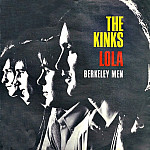 June 3, 1970 With the BBC refusing to air The Kinks' new single "Lola" because of its reference to "Coca-Cola" (brand names being a no-no for the corporation), lead singer Ray Davies flies all the way from London to New York to re-record the line as "Where you drink champagne and it tastes just like cherry-cola."More
March 28, 1970 John Lennon's "Instant Karma! (We All Shine On)" hits its peak position of #3 on the Billboard Hot 100.
September 20, 1969 Linda Martell's "Color Him Father" peaks at #22 on Billboard's Country chart. No Black woman gets higher on the chart until 2024, when Beyoncé's "Texas Hold 'Em" goes all the way to #1. That song is from her album Cowboy Carter, which features Martell.
 August 18, 1969 Jimi Hendrix closes out Woodstock with an early morning performance of "Hey Joe." The festival headliner, he was supposed to play the previous night, but when it ran long, he ended up taking the stage on a Monday morning. His set includes a scorching rendition of "The Star Spangled Banner."More
July 28, 1969 Eight days after the moon landing, "Bad Moon Rising" by Creedence Clearwater Revival reaches its chart peak of #2. The song was inspired by a 1941 movie called The Devil And Daniel Webster, about a hurricane that blows through a town.
April 26, 1969 "Oh Happy Day" by The Edwin Hawkins Singers enters the Hot 100 at #72, becoming the first pure gospel song to make that chart. More
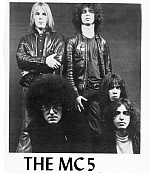 April 16, 1969 Elektra Records drop the MC5 from their roster after the group takes out an ad in an underground newspaper castigating the department store chain Hudson's for not stocking their debut album, Kick Out The Jams. Hudson's didn't want it on their shelves because of a line in the title track: "Kick out the jams, motherf--ker!"More
 April 10, 1969 Serge Gainsbourg and Jane Birkin's steamy duet "Je T'aime... Moi Non Plus" hits #1 in the UK, where it's banned by the BBC.More
November 2, 1968 Jose Feliciano's unique rendition of "The Star Spangled Banner," which he performed on acoustic guitar before Game 5 of the World Series on October 7, enters the Hot 100 at #89, making it the first version of the US National Anthem to chart (it peaks at #50). Many singers start adding their own flavor to the song; the next version to chart is Whitney Houston's Super Bowl performance in 1991, which hits #20.
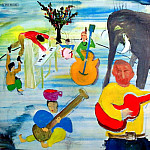 July 1, 1968 The Band release Music from Big Pink, their debut studio album.More
December 27, 1967 After establishing his career as a poet and writer, Leonard Cohen releases his first album, Songs of Leonard Cohen, on Columbia Records. The album doesn't sell particularly well at first, peaking at #83 on the Billboard charts, but Cohen's powerful voice and lyrics in oft-covered tracks like "Suzanne" and "So Long, Marianne" become highly influential.
July 22, 1967 The Vanilla Fudge rock cover of "You Keep Me Hangin' On" peaks at #67 in America as the band play their first concert, supporting The Byrds at the Village Theater (later the Fillmore East) in New York City.
August 13, 1966 Napoleon XIV's goofy breakup song "They're Coming To Take Me Away, Ha-haaa" peaks at #3 on the Hot 100. It quickly drops to the bottom of the Top 40, however, as several radio stations ban the tune, fearing its lyrics might be interpreted as being insensitive to the mentally ill.
©2026 Songfacts®, LLC