
Calendar Search Results: u i a song
December 1, 1965 Overcoming protests from residents worried about their property values, Joan Baez gets approval to open the Institute For The Study Of Nonviolence, a school in Carmel Valley, California. It later moves to Palo Alto and eventually becomes the Resource Center for Nonviolence.
November 29, 1965 Wallis Buchanan (didgeridoo player for Jamiroquai) is born.
November 26, 1965 After cleaning a church in Stockbridge, Massachusetts, where they had Thanksgiving dinner the day before, Arlo Guthrie and a friend clean up the place, but toss the trash down a hill when they can't find an open dump. They are arrested, fined $25 each, and forced to pick up the garbage. When they return to the church, Guthrie writes "Alice's Restaurant Massacree" about the incident, embellishing some details.More
November 24, 1965 NBC airs the musical special Frank Sinatra: A Man And His Music to honor the crooner.
November 19, 1965 At the Glad Rags Ball in London, The Who's lead singer, Roger Daltrey, storms off stage in the middle of a set plagued with PA problems. Rumors of a Who breakup spread quickly throughout London with most of them naming Boz Burrell (ofKing Crimson and Bad Company) as Daltrey's possible replacement.
November 13, 1965 Simple as Do-Re-Mi: The Sound of Music soundtrack, featuring Julie Andrews, hits #1 in America.
November 11, 1965 The Beatles pull an all-nigher at Abbey Road Studios to complete work on their Rubber Soul album. They finish up the songs "You Won't See Me," "Girl," "Wait," and "I'm Looking Through You."
November 6, 1965 "Get Off Of My Cloud" by The Rolling Stones hits #1 in America for the first of two weeks. The song was written in response to record company pressure to follow up "(I Can't Get No) Satisfaction" with another hit.
October 26, 1965 The Beatles are awarded Members of the British Empire (MBE) medals from Queen Elizabeth II in a ceremony held at Buckingham Palace. John Lennon claims they smoked marijuana in the bathroom before receiving the awards, although George Harrison said it was just tobacco. Harrison and Paul McCartney put the awards on their jackets for the Sgt. Pepper album cover; Lennon sends his back in 1969.
October 9, 1965 The Ohio State University marching band plays "Hang On Sloopy" for the first time when their football team takes on Illinois. It soon becomes an OSU favorite, and in 1985 is designated the state song of Ohio.
October 1, 1965 At a concert at Carnegie Hall, Bob Dylan introduces his new band. Formerly Ronnie Hawkins' backup band, they were known as The Hawks, but soon became The Band.
September 25, 1965 Barry McGuire's "Eve Of Destruction" hits #1, where it will stay for one week.
September 21, 1965 The Moody Blues take part in the "Pop From Britain" concert at Royal Albert Hall in London, making their first major performance. They had recently signed with The Beatles' manager Brian Epstein, who got them the gig.
September 16, 1965 The Dean Martin Show makes its debut, with Martin using his hit "Everybody Loves Somebody" as the theme song. The popular variety show runs until 1974 and introduces us to a group of backup dancers called The Golddiggers. Martin coins a new nickname for guest Frank Sinatra when he refers to his pal as "Chairman of the Board."
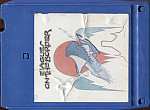 September 15, 1965 Ford offers factory-installed 8-track tape players in its Mustang, Thunderbird and Lincoln models. This marks the first time 8-track players are widely available, so you can only get the tapes in auto parts stores or Ford dealers. The players have a tendency to chew up the tapes, leading to 8-track roadkill as drivers throw the tangled tapes out their windows.More
September 11, 1965 Electronica musician Moby is born Richard Melville Hall in Harlem, New York City.
September 8, 1965 An ad appears in Variety looking for "Four Insane Boys, Ages 17-21" to star in a new TV show: The Monkees.
September 3, 1965 Lou Christie records "Lightnin' Strikes" in New York City, with session player Ralph Casale improvising the thunderous guitar solo.
September 1, 1965 James Brown breaks out some sweet dance moves on the TV show Shindig!, where he performs his hit "Papa's Got A Brand New Bag."More
August 27, 1965 Elvis Presley meets The Beatles for the first time when the Fab 4 are brought to The King's Los Angeles mansion. They hang out, talk music and have a little jam session. John Lennon would later say, "If it hadn't been for him, The Beatles would be nothing."
August 21, 1965 Barry McGuire releases "Eve Of Destruction."
 August 15, 1965 The Beatles play Shea Stadium in New York - home of The Mets - marking the first time a rock band headlines a stadium in America. With Beatlemania in full force, the screaming girls drown out the band in a less-than-intimate, but very memorable performance in front of a sold-out crowd of 56,000.More
August 13, 1965 The Beatles release the album Help! in the US. Along with the title track, it includes the hit "Ticket To Ride."
August 7, 1965 Herman's Hermits knock "(I Can't Get No) Satisfaction" from the top spot in America with "I'm Henry The VIII, I Am," a "second verse, same as the first" cover of a music hall song from 1910.
August 5, 1965 Production is halted on the Jan & Dean movie, Easy Come, Easy Go when 17 crew members are injured in an on-set railroad accident, with Jan Berry suffering a broken leg. The film is shelved.
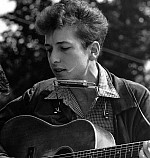 July 25, 1965 Dylan plugs in! At the Newport Folk Festival, Bob Dylan plays an electric set for the first time, horrifying folkies everywhere.More
July 24, 1965 Bob Dylan charts for the first time as an artist in the US when "Like A Rolling Stone" enters at #91. A handful of his songs have already been hits as covered by other artists, most notably the 1963 Peter, Paul and Mary version of "Blowin' In The Wind."
July 20, 1965 Bob Dylan releases "Like A Rolling Stone." At 6:13, it's twice as long as the average pop song, but it nonetheless becomes Dylan's first big hit and one of his most popular songs.
July 19, 1965 The Beatles release "Help!" in the US, backed with "I'm Down." It becomes their ninth #1 hit.
July 10, 1965 The Kinks play the Seattle Center Coliseum in what turns out to be their last show on American soil until December 1969, as the powerful American Federation of Musicians union bans them. The group fell afoul of the union with petulant behavior, canceled concerts, and an indifference toward their audiences - at a Sacramento show on June 26 they filled their set with an extended jam of "You Really Got Me." Poor ticket sales and disputes with their management set the stage for their ill-fated American trek.
©2026 Songfacts®, LLC