
Calendar Search Results: y o u t u b e r
November 30, 1931 Teddy Wilburn (of the country duo The Wilburn Brothers) is born in Hardy, Arkansas. In addition to recording hit records, Teddy and brother Doyle start a music publishing company and sign an up-and-coming singer named Loretta Lynn.
November 25, 1931 Nat Adderley, jazz cornet and trumpet player, is born in Tampa, Florida, to a family that includes older brother, Julian, also known as sax player Cannonball Adderley.
November 24, 1931 Guitarist Tommy Allsup (of The Crickets) is born in Owasso, Oklahoma. Co-wrote The Ventures' "Guitar Twist." Allsup nearly became a tragic footnote in music history when he flipped a coin to win a seat on the plane that killed Buddy Holly, Ritchie Valens and J.P. "The Big Bopper" Richardson, but he "lost" to Valens.
November 12, 1931 Abbey Road Studios opens for business at 3 Abbey Road, St. John's Wood, London. The Beatles do most of their recording there and name their 1969 album Abbey Road, with a famous photo of the band traversing the crosswalk outside the studio.
May 28, 1931 Sonny Burgess, rockabilly guitarist of the Pacers and later The Sun Rhythm Section, made up of former Sun Records' session musicians, is born Albert Austin Burgess of Newport, Arkansas.
April 20, 1931 Louis Armstrong records "When It's Sleepy Time Down South" from the play Under A Virginia Moon. He adds the song to his live repertoire, and it becomes a jazz standard, later recorded by Billie Holiday, Louis Prima, Harry Connick, Jr. and many others.
March 25, 1931 Nine young black males are arrested in Paint Rock, Alabama, and accused of raping two white women. The ensuing years' long legal case inspires a song by Leadbelly and a musical, The Scottsboro Boys.
March 3, 1931 Cab Calloway records "Minnie The Moocher" on the Brunswick label in New York City. It would become the first jazz recording to sell a million copies.
February 16, 1931 Otis Blackwell, composer of the seminal rock 'n roll tunes "Great Balls of Fire" and "All Shook Up," and the R&B sizzler "Fever," is born in Brooklyn, New York.
November 12, 1930 Songwriter and music executive Bob Crewe is born Stanley Robert Crewe in Newark, New Jersey. Co-wrote many Four Seasons hits with Bob Gaudio, including "Big Girls Don't Cry" and "Walk Like a Man."
October 1, 1930 Singer/actor Richard Harris, who has an unlikely hit with "MacArthur Park," is born in Limerick, Ireland.
September 28, 1930 Country singer Tommy Collins is born in Bethany, Oklahoma. A forerunner of the Bakersfield sound, he penned "If You Ain't Lovin' (You Ain't Livin')," later a #1 hit for George Strait.
September 23, 1930 Ray Charles is born Ray Charles Robinson in Albany, Georgia. Blinded by glaucoma by age 7, he becomes a transgressive musician, adding gospel elements to new forms of music that become known as soul and rock.
November 30, 1929 Dick Clark is born in Mount Vernon, New York. Dubbed the "world's oldest teenager," he becomes a cultural icon as the longtime host of American Bandstand and Dick Clark's New Year's Rockin' Eve.
August 12, 1929 Country singer-songwriter Buck Owens is born Alvis Edgar Owens Jr. in Sherman, Texas.
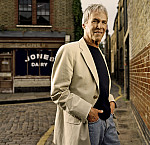 May 12, 1929 Burt Bacharach is born in Kansas City, Missouri.More
April 16, 1929 R&B singer Roy Hamilton ("Unchained Melody," "You'll Never Walk Alone") is born in Leesburg, Georgia.
August 6, 1928 Andy Warhol, who makes his mark on the music world as manager for the The Velvet Underground and designer of the Rolling Stones Sticky Fingers album cover, is born in Pittsburgh, Pennsylvania.
June 29, 1928 The Winterland Ballroom opens in San Francisco, California. It's an ice-skating rink that can be converted into a general entertainment venue for opera, boxing, and other events, costing a whopping (for 1928) $1 million to build. It will go on to become a concert location for many famous acts, including The Sex Pistols, Neil Young, Bob Dylan, Peter Frampton, Deep Purple, Led Zeppelin, Jethro Tull, and Pink Floyd.
May 3, 1928 Country singer Dave Dudley is born David Darwin Pedruska in Spencer, Wisconsin.
April 3, 1928 Country singer-songwriter Don Gibson ("Sweet Dreams," "I Can't Stop Loving You") is born in Shelby, North Carolina.
December 27, 1927 Show Boat opens at the Ziegfeld Theatre on Broadway, changing the paradigm for modern musicals.More
December 3, 1927 Columbia Records talent scout Frank Buckley Walker records Blind Willie Johnson, Billiken Johnson, and Coley Jones in Dallas, Texas. The recordings turn Johnson into one of the most popular musical acts of his time and capture his immortal "Dark Was the Night, Cold Was the Ground."
October 13, 1927 Country singer Anita Kerr, leader of The Anita Kerr Singers, is born Anita Jean Grilli in Memphis, Tennessee. Her group will perform backing vocals for Red Foley, Ernest Tubb, Roy Orbison, and Willie Nelson, among others.
May 25, 1927 Norman Petty, recording engineer for Buddy Holly, is born in Clovis, New Mexico. He'll also produce hits for Roy Orbison and Waylon Jennings.
March 1, 1927 Harry Belafonte is born in Harlem, New York, but at age 8 moves to Jamaica (his mother's birthplace) with his family. The Belafontes move back to New York in the early stages of World War II; in the '50s, Harry becomes a top entertainer, his career buoyed by the calypso craze.
January 13, 1927 Country singer-songwriter Liz Anderson is born in Roseau, Minnesota. Aside from her own hit "Mama Spank" (1964), she pens hits for other artists, including Merle Haggard ("(My Friends Are Gonna Be) Strangers") and her own daughter, Lynn Anderson ("If I Kiss You (Will You Go Away)").
January 10, 1927 Singer/violinist Gisele MacKenzie is born in Winnipeg. She finds popularity as a guest on several TV shows throughout the '50s, including The Jack Benny Program and Your Hit Parade.
December 24, 1926 Lee Dorsey, known for his 1961 hit "Ya Ya," is born Irving Lee Dorsey in New Orleans, Louisiana. He befriends future rock and roll legend Fats Domino before moving to Portland, Oregon, at age 10.
December 11, 1926 R&B singer Willie Mae "Big Mama" Thornton is born in Ariton, Alabama. She was the first to record "Hound Dog," made famous by Elvis Presley.
©2026 Songfacts®, LLC