
Calendar Search Results: ding song
June 16, 1975 Singer Adam Wade becomes the first African-American game show host when Musical Chairs debuts on CBS. The short-lived series is created by noted record producer Don Kirshner, and features a slew of musical guests, including The Tokens, The Spinners, and Sister Sledge.
June 16, 1975 R&B record executive Don Robey dies of a heart attack at age 71. As founder of Peacock Records and eventual owner of Duke Records, Robey was instrumental in the careers of several R&B artists throughout the '50s and '60s, including Big Mama Thornton, Johnny Ace, Johnny Otis, and Junior Parker.
June 6, 1975 "It was the dark of the moon on the sixth of June," according to C.W. McCall's song "Convoy."
June 3, 1975 Ozzie Nelson, who starred with his real-life family, including son Rick Nelson, in the long-running radio and television series The Adventures of Ozzie and Harriet, dies of liver cancer at age 69.
May 16, 1975 Kiss play the Cobo Arena, Detroit, recording it for some of their live album Alive!, their first Gold album. In September, Bob Seger records two concerts at Cobo for Live Bullet, his first Gold album.
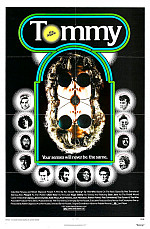 March 19, 1975 The movie version of The Who's rock opera Tommy premieres in America.More
March 12, 1975 George Jones and Tammy Wynette's divorce is finalized, ending a six-year marriage between the couple known as "Mr. and Mrs. Country Music." They keep working together, and a year later release "Golden Ring," #1 Country hit about a wedding ring that follows a couple through love, marriage, and divorce.
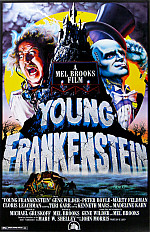 December 15, 1974 Young Frankenstein opens in theaters. When members of Aerosmith take a break from recording the Toys in the Attic album and see the film, they laugh hysterically at the scene where Igor (Marty Feldman) tells Dr. Frankenstein (Gene Wilder) to "walk this way," and the doctor imitates Igor's walk. Returning to the studio, they have the title to the track they've been working on.More
November 28, 1974 John Lennon makes his last concert appearance when he joins Elton John on stage at Madison Square Garden, reciprocating for Elton's appearance on "Whatever Gets You Thru The Night" and making good on a bet he lost: Elton wagered that "Whatever Gets You Thru The Night" would hit #1 in the US, and when it did, Lennon owed the appearance. The pair perform that song and also do The Beatles' "I Saw Her Standing There" and "Lucy in the Sky With Diamonds."
September 11, 1974 WROV-AM in Roanoke, Virginia, starts playing the The Doobie Brothers album cut "Black Water" in honor of a local tributary of the same name. The resounding response from listeners prompts a single release two months later, and in March 1975, the song becomes a #1 hit.
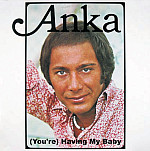 August 24, 1974 Paul Anka's "(You're) Having My Baby" hits #1 for the first of three weeks despite condemnation from feminist groups.More
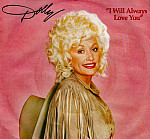 June 8, 1974 Dolly Parton's "I Will Always Love You" goes to #1 on the Country chart. Nearly two decades later, Whitney Houston's R&B version tops the Hot 100 and becomes one of the best-selling singles of all time.More
March 2, 1974 Stevie Wonder wins four Grammy Awards, including Album of the Year for Innervisions. Gladys Knight & The Pips win for "Neither One of Us" (Best Pop Vocal Performance By A Duo, Group or Chorus) and "Midnight Train To Georgia" (Best R&B Vocal Performance By A Group).
February 9, 1974 At The Palace in Detroit, The Stooges play their last show until their 2003 reunion. An imploding Iggy Pop taunts the crowd, which responds with various projectiles. The opening act is a young band called Aerosmith.More
 February 2, 1974 Barbra Streisand scores her first #1 when "The Way We Were" hits the top spot.More
January 15, 1974 With '50s nostalgia trending, Happy Days premieres on ABC with "Rock Around The Clock" as its theme song.
December 25, 1973 Slade, Suzi Quatro and 10cc are among the performers on the BBC Top Of The Pops Christmas special. The show's dancers do a routine with dogs to Gilbert O'Sullivan's "Get Down," leading to rumors that the "bad dog baby" in the song was Sullivan's misbehaving pooch (it isn't).
November 19, 1973 Led Zeppelin begin recording the demos for their new album, Physical Graffiti, including a new song entitled "Driving To Kashmir" (today known as "Kashmir").
November 16, 1973 Bob Dylan releases his 13th studio album, Dylan. It features various covers and studio outtakes, including versions of Joni Mitchell's "Big Yellow Taxi" and Jerry Jeff Walker's "Mr. Bojangles."
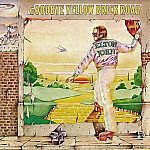 October 5, 1973 Elton John releases Goodbye Yellow Brick Road, his most successful studio album.More
October 3, 1973 The Who, forced to comply with union rules by recording a new track to "5:15" for their appearance on Top Of The Pops, take out their frustrations at the end of the performance. Pete Townshend smashes their gear and gives a producer the two-finger salute; Keith Moon throws wigs from the props department into the audience. The offensive bits are edited out when the show airs the following night.
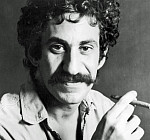 September 20, 1973 Jim Croce is killed in a plane crash in Natchitoches, Louisiana, at age 30. More
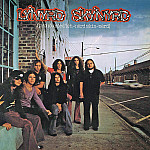 August 13, 1973 Lynyrd Skynyrd release their debut album, Pronounced 'Lĕh-'nérd 'Skin-'nérd. It's an impressive set, containing the Skynyrd classics "Tuesday's Gone," "Simple Man" and "Free Bird."More
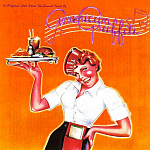 August 11, 1973 The first big oldies revival kicks off in earnest as George Lucas' new film, American Graffiti, opens in theaters. Set in 1962, the film creates a wave of nostalgia for songs from the '50s and early '60s.More
May 29, 1973 The Byrds break up when founding member Roger McGuinn performs his first solo concert at New York's Academy of Music. Use of "The Byrds" name gets sticky in ensuing years, and in 1989 McGuinn plays some shows with original members Chris Hillman and David Crosby to stake their legal claim to the name.
May 23, 1973 Pat Garrett & Billy the Kid, starring James Coburn and Kris Kristofferson, debuts in theaters. In addition to scoring and writing songs for the film, Bob Dylan makes his acting debut as a knife-wielding stranger named Alias. His acting is derided, but he lands a hit with "Knockin' On Heaven's Door."
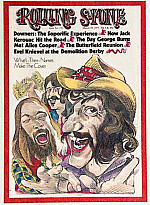 March 29, 1973 Dr. Hook & The Medicine Show, who have a hit with "The Cover Of 'Rolling Stone'," appear on the cover of Rolling Stone magazine.More
March 17, 1973 The sci-fi musical Lost Horizon, scored by Burt Bacharach, bombs at the box office. The failure precipitates Bacharach's split from longtime songwriting partner Hal David and Dionne Warwick, who had performed their songs for more than a decade.More
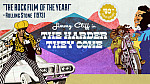 February 8, 1973 The Jamaican cult classic film The Harder They Come is released in the US.More
January 9, 1973 Sean Paul is born Sean Paul Ryan Francis Henriques in Kingston, Jamaica. In the '00s he has a string of dancehall hits including "Get Busy," "We Be Burnin'" and "Temperature" that are popular around the world, especially in America, where he has more chart hits than any other Jamaican.
©2026 Songfacts®, LLC