
Calendar Search Results: y o u t u b e r
August 24, 1969 John Lennon writes, rehearses, and records a song about his recent heroin withdrawal entitled "Cold Turkey," where he also puts into practice his recent introduction to "primal scream" therapy. Fans and critics are shocked and appalled by the emotionally raw recording, a prelude to his eventual Plastic Ono Band album.
August 23, 1969 Johnny Cash's album Johnny Cash At San Quentin, the soundtrack to a documentary of the same name featuring Cash performing at the prison, hits #1 for the first of four weeks.
August 19, 1969 Crosby, Stills and Nash appear on the Dick Cavett Show, giving a first-hand account of the Woodstock festival that took place over the weekend. Joni Mitchell, who skipped the festival to make sure she could keep her appearance on the show, performs a song she wrote about it called "Woodstock."
 August 18, 1969 Jimi Hendrix closes out Woodstock with an early morning performance of "Hey Joe." The festival headliner, he was supposed to play the previous night, but when it ran long, he ended up taking the stage on a Monday morning. His set includes a scorching rendition of "The Star Spangled Banner."More
August 18, 1969 While filming the violent gangster movie Ned Kelly in Australia, Mick Jagger is hit in the hand by a stray bullet from an old gun being used as a prop.
August 17, 1969 Woodstock moves into day three, with performances by Joe Cocker; Crosby, Stills, Nash & Young; Blood, Sweat & Tears; and Country Joe & the Fish, who perform their famous "Fish Cheer."
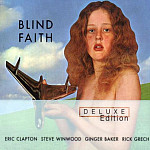 August 16, 1969 Eric Clapton's supergroup Blind Faith release their self-titled album. On the cover is a photo of a naked 11-year-old girl holding a model spacecraft.More
August 16, 1969 It's Day 2 of Woodstock, featuring performances by the Grateful Dead, Creedence Clearwater Revival, Janis Joplin and Santana. One memorable moment comes during The Who's set, when the activist Abbie Hoffman interrupts their set and grabs the microphone. After saying a few words about fellow activist John Sinclair, Pete Townshend hits him with his guitar.
August 15, 1969 It's Day 1 of the Woodstock festival on Max Yasgur's 60-acre farm in Bethel, New York (the festival was originally going to be in Woodstock, New York, so they kept the name). Day 1 doesn't have the biggest names, but massive crowds make it clear that something's happening here. Artists to appear this day include Richie Havens, Joan Baez, Tim Hardin and Arlo Guthrie.
August 15, 1969 On the day Woodstock begins, Bob Dylan sails on the Queen Elizabeth 2 for the Isle of Wight in England. Fed up with the "druggies" who'd been showing up at his house at all hours, he wants nothing to do with Woodstock and opts instead to perform at the Isle of Wight Festival two weeks later.
August 9, 1969 Sly and the Family Stone release "Hot Fun In The Summertime."
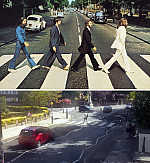 August 8, 1969 The Beatles shoot the photo for their Abbey Road album cover at the crosswalk outside Abbey Road studios, where they are recording. Fans find many nested clues in the shot of the four band members walking in stride across the street, fuelling rumors that Paul McCartney is dead.More
August 2, 1969 Bob Dylan makes a rare return to his hometown of Hibbing, Minnesota, to attend his 10-year high school reunion. Accompanied by his wife, Sara, he joins classmates at the local Moose lodge before the event, and it proves awkward. He never makes it to the reunion itself, and makes no more public visits to the town.
August 1, 1969 Carl Wilson of The Beach Boys is indicted in Los Angeles for failing to perform his required community service hours, which were imposed upon him after he refused to be drafted as a conscientious objector; rather than the janitorial duty he was sentenced to at LA County Hospital, Wilson taught music classes there instead.
July 30, 1969 The Beatles, producer George Martin, and the Abbey Road engineers assemble the first rough cut of the proposed Abbey Road medley. Paul McCartney, feeling that the song "Her Majesty" distracts from the flow of the medley, has it removed and orders it erased. Second engineer John Kurlander, not wanting to destroy a Beatles song, instead appends it to the end of the medley tape, adding 15 seconds of leader to make sure it's kept separate. When he finds out, Paul likes the effect so much that he leaves the ending of the album just that way.
July 26, 1969 The 5th Dimension's two lead singers, Marilyn McCoo and Billy Davis Jr. are married. The duo will score their own hit in 1977 with "You Don't Have To Be A Star (To Be In My Show)."
July 25, 1969 The Beatles work on a slew of songs for their Abbey Road album: "Sun King," "Mean Mr. Mustard," "Come Together," "Polythene Pam" and "She Came In Through the Bathroom Window."
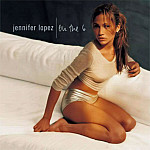 July 24, 1969 Jennifer Lopez is born to Puerto Rican parents in The Bronx in New York City.More
July 21, 1969 The day after the Apollo 11 moon landing (the first time man walked on the moon), Duke Ellington performs a song he wrote for the occasion called "Moon Maiden" as part of ABC's coverage of the historic event.
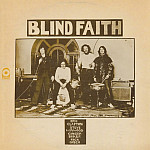 July 21, 1969 Blind Faith, a group comprised of Eric Clapton, Steve Winwood, Ginger Baker and Ric Grech, release their self-titled debut album in the United States.More
July 20, 1969 R&B singer Roy Hamilton, who sang a popular cover of "Unchained Melody" in 1955, dies shortly after suffering a stroke at age 40.
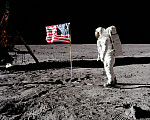 July 20, 1969 When the Apollo 11 spacecraft lands on the moon and Neil Armstrong takes his one giant leap for mankind, it reverberates through the world of music.More
July 8, 1969 Singer/actress Marianne Faithfull, girlfriend of Mick Jagger, attempts suicide with barbiturates while on the set of the film Ned Kelly (also starring Mick). She is dropped from the cast of the movie, eventually recovers, and when awaking from her coma, tells friends that "wild horses couldn't drag me away." The Rolling Stones song "Wild Horses" is built around that phrase.
July 5, 1969 The Rolling Stones put on a free concert in London's Hyde Park, which becomes a tribute to their founding member Brian Jones, who died two days earlier.
July 5, 1969 Wu-Tang Clan leader RZA is born Robert Fitzgerald Diggs in Brownsville, New York. A movie buff, he does a lot of acting (American Gangster, G.I. Joe: Retaliation) and works on many soundtracks, notably Quentin Tarantino's Kill Bill films.
June 25, 1969 Sly & the Family Stone record "Hot Fun in the Summertime."
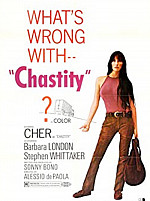 June 24, 1969 Written and produced by Sonny Bono, the romantic drama Chastity casts Cher, in her first solo film role, as a hippie runaway who tries to overcome her troubled past. The movie bombs and turns Cher off from acting in films for the next decade.More
June 20, 1969 After working as a music teacher for most of her 20s, Roberta Flack releases her debut album, First Take, at age 32. It doesn't get much attention at first but goes to #1 three years later when the song "First Time Ever I Saw Your Face" becomes a surprise hit thanks to its use in the Clint Eastwood movie Play Misty For Me.
 June 16, 1969 Experimental avant-garde/free-jazz artist Don Van Vliet, aka Captain Beefheart, releases Trout Mask Replica, a polyrhythmic, polytonal collection of noise that is either an unlistenable mess or a work of genius.More
June 13, 1969 At a press conference in London, Mick Taylor is introduced as the new guitarist of The Rolling Stones, replacing founding member Brian Jones.
©2026 Songfacts®, LLC