
Calendar Search Results: i were to
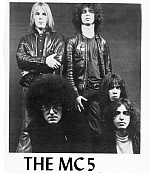 April 16, 1969 Elektra Records drop the MC5 from their roster after the group takes out an ad in an underground newspaper castigating the department store chain Hudson's for not stocking their debut album, Kick Out The Jams. Hudson's didn't want it on their shelves because of a line in the title track: "Kick out the jams, motherf--ker!"More
 April 10, 1969 Serge Gainsbourg and Jane Birkin's steamy duet "Je T'aime... Moi Non Plus" hits #1 in the UK, where it's banned by the BBC.More
 February 15, 1969 Rolling Stone's front cover features an article on "groupies" - introducing a new term to the popular lexicon.More
 January 30, 1969 The Beatles stage their famous rooftop concert on the roof of Apple Records in London. After performing a few songs, including "Get Back" and "Don't Let Me Down," the police shut them down as a large crowd gathers. It is The Beatles' last public performance.More
 January 4, 1969 Jimi Hendrix is banned from the BBC after going off-script when he and his band, The Jimi Hendrix Experience, appear on the show Happening for Lulu, hosted by the "To Sir With Love" singer Lulu.More
 December 26, 1968 Led Zeppelin's first US tour begins in Denver. They're the opening act for Vanilla Fudge.More
October 7, 1968 Long before the US National Anthem becomes a performance piece, the Puerto Rican singer Jose Feliciano makes waves when he does a slow, jazzy version of the song before Game 5 of the World Series between the Tigers and Cardinals. Among those joining the uproar are Tigers starting pitcher Mickey Lolich, who complains that the overly long rendition screwed up his pregame routine.More
September 27, 1968 Flatt & Scruggs play the Avalon Ballroom in San Francisco, bringing bluegrass to a city known for its psychedelic sound. "The hippies were coming up and touching Scruggs and saying 'You're for real,'" producer Bob Johnston recalls.
September 25, 1968 Mary Hopkin's "Those Were The Days," produced by Paul McCartney and released on The Beatles' Apple Records, goes to #1 in the UK, knocking off "Hey Jude." It stays for six weeks before being bumped by Joe Cocker's cover of the Beatles song "With A Little Help From My Friends."
 April 6, 1968 The Graduate soundtrack hits #1 in America thanks to Simon & Garfunkel's "Mrs. Robinson," which tops the Hot 100 less than two months later.More
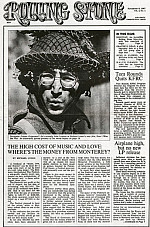 November 9, 1967 The first issue of Rolling Stone magazine is published, with a photo of John Lennon on the cover and items about David Crosby, The Who and Country Joe McDonald (of Country Joe & the Fish).More
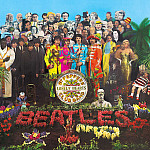 May 26, 1967 The Beatles release their landmark album Sgt. Pepper's Lonely Hearts Club Band in the UK.More
 April 17, 1967 Liz Phair is born in New Haven, Connecticut; she is raised by her adoptive parents in Cincinnati, Ohio, and Winnetka, Illinois. She becomes a '90s indie-rock icon with her debut album, Exile In Guyville, a feminist treatment of the Rolling Stones' Exile On Main St.More
January 15, 1967 Mick Jagger does as he's told and sings "let's spend the night together" as "let's spend some time together" when The Rolling Stones appear on the Ed Sullivan Show. Jagger rolls his eyes derisively when he sings the altered line.More
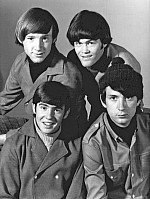 September 12, 1966 The Monkees TV show makes its debut, with four actors chosen to portray a pop band based on The Beatles. While The Monkees are a fictional band, they become very real and eventually play on their own recordings instead of studio musicians.More
November 26, 1965 After cleaning a church in Stockbridge, Massachusetts, where they had Thanksgiving dinner the day before, Arlo Guthrie and a friend clean up the place, but toss the trash down a hill when they can't find an open dump. They are arrested, fined $25 each, and forced to pick up the garbage. When they return to the church, Guthrie writes "Alice's Restaurant Massacree" about the incident, embellishing some details.More
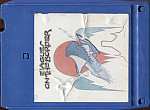 September 15, 1965 Ford offers factory-installed 8-track tape players in its Mustang, Thunderbird and Lincoln models. This marks the first time 8-track players are widely available, so you can only get the tapes in auto parts stores or Ford dealers. The players have a tendency to chew up the tapes, leading to 8-track roadkill as drivers throw the tangled tapes out their windows.More
 August 15, 1965 The Beatles play Shea Stadium in New York - home of The Mets - marking the first time a rock band headlines a stadium in America. With Beatlemania in full force, the screaming girls drown out the band in a less-than-intimate, but very memorable performance in front of a sold-out crowd of 56,000.More
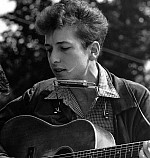 July 25, 1965 Dylan plugs in! At the Newport Folk Festival, Bob Dylan plays an electric set for the first time, horrifying folkies everywhere.More
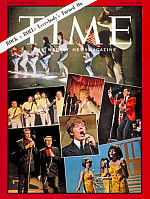 May 21, 1965 Ten years into the Rock Era, it looks like it's here to stay. Time magazine reports on the rock revival with the cover story, "Rock 'n' Roll: The Sound of the Sixties."More
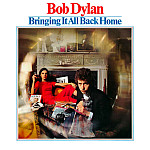 May 8, 1965 D.A. Pennebaker films Bob Dylan in one of the earliest music videos ever shot, the famous "flashcard" clip for "Subterranean Homesick Blues."More
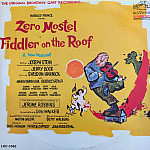 September 22, 1964 The musical Fiddler on the Roof makes its Broadway debut at the Imperial Theatre.More
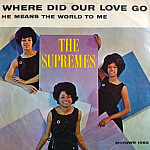 August 22, 1964 After three years without a big hit, The Supremes' "Where Did Our Love Go" hits #1 in the US, the first of five consecutive chart-toppers.More
March 26, 1964 Barbra Streisand opens on Broadway in Funny Girl, two months after landing her first Top 10 hit with the show's number "People." More
 February 1, 1964 Indiana Governor Matthew Walsh bans the Kingsmen's version of "Louie Louie," calling it "pornographic" and making (literally) a federal case out of it.More
 November 4, 1963 Newsweek runs a story on Bob Dylan insinuating he stole the song "Blowin' In The Wind" from a high school student. Dylan never comments on it, and the rumor slowly grows into an urban legend.More
September 10, 1963 While traveling in London, John Lennon and Paul McCartney encounter Rolling Stones manager Andrew Loog Oldham, who worked as a promoter for The Beatles earlier in the year. Oldham invites them to The Stones rehearsal, where Lennon and McCartney complete a song they were working on, "I Wanna Be Your Man," and give it to The Stones, which they use as their second UK single.
May 1, 1963 The Rolling Stones sign a management deal with Andrew Loog Oldham, who removes their apostrophe (they were The Rollin' Stones) and drops piano player Ian Stewart from the official lineup; he continues to play with the band and acts as road manager, but isn't recognized as a member. Stewart, who doesn't look the part, remains an integral part of the Stones operation until his death in 1985.
January 19, 1961 The night before John F. Kennedy's inauguration, Frank Sinatra throws a star-studded gala to eradicate the Democratic Party's $2 million campaign debt. With the help of Peter Lawford, fellow Rat Packer and husband of JFK's sister Patricia, Sinatra enlists elite entertainers for the evening, including Nat King Cole, Harry Belafonte, Gene Kelly, Ethel Merman, and actors Laurence Olivier, Janet Leigh, Tony Curtis, and Bette Davis.More
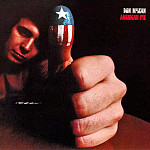 February 3, 1959 Buddy Holly, Ritchie Valens and J.P. "The Big Bopper" Richardson are killed in a plane crash. Don McLean would call it "The Day the Music Died" in his 1971 hit "American Pie."More
©2026 Songfacts®, LLC