
Calendar Search Results: take it o
June 16, 1967 The first Monterey International Pop festival begins at the County Fairgrounds in Monterey, California. It's the first of many big Rock festivals, with The Who, Grateful Dead, Jefferson Airplane, Janis Joplin, Jimi Hendrix and The Animals among those performing. Many consider it the beginning of the "Summer of Love."More
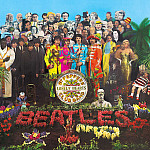 May 26, 1967 The Beatles release their landmark album Sgt. Pepper's Lonely Hearts Club Band in the UK.More
May 1, 1967 Carl Wilson of The Beach Boys is arrested by the FBI for draft-dodging and refusing to take an oath of allegiance to the United States. Wilson, a conscientious objector to the Vietnam War, is eventually exonerated by his draft board and rejoins the band, touring in Ireland.
 April 17, 1967 Liz Phair is born in New Haven, Connecticut; she is raised by her adoptive parents in Cincinnati, Ohio, and Winnetka, Illinois. She becomes a '90s indie-rock icon with her debut album, Exile In Guyville, a feminist treatment of the Rolling Stones' Exile On Main St.More
March 21, 1967 John Lennon takes his first major LSD trip and freaks out while recording backing vocals on the track "Getting Better." Producer George Martin, not realizing the effects of the drug, takes Lennon to the roof of Abbey Road Studios to get some fresh air. Paul McCartney and George Harrison, upon learning where John is, rush up to get him down. The group works on a piano track for "Lovely Rita" instead.
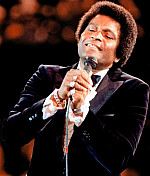 January 7, 1967 Charley Pride becomes the first African American solo singer to perform at the Grand Old Opry in Nashville. He is invited to perform at the venerable country music mecca after the success of his hit "Just Between You and Me," which makes it to #9 on the Country music chart.More
December 22, 1966 Beatles producer George Martin and his engineer Geoff Emerick pull off one of the all-time great feats of sound editing: combining two takes of "Strawberry Fields Forever" - in different keys and tempos - to make one song. The edit is 59 seconds in, just before John Lennon sings, "Going to..."
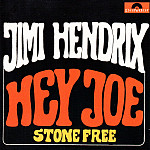 December 16, 1966 The first Jimi Hendrix single is released: "Hey Joe." The song is about a guy shoots his "old lady" after catching her cheating.More
December 8, 1966 Sinead O'Connor is born in Glenageary, County Dublin, Ireland. At 23 she takes the Prince-written "Nothing Compares 2 U" to #1 around the world, but she struggles with fame and soon becomes known less for her music and more for courting controversy, especially after she tears up a photo of the Pope on Saturday Night Live in 1992.
August 13, 1966 Napoleon XIV's goofy breakup song "They're Coming To Take Me Away, Ha-haaa" peaks at #3 on the Hot 100. It quickly drops to the bottom of the Top 40, however, as several radio stations ban the tune, fearing its lyrics might be interpreted as being insensitive to the mentally ill.
 June 20, 1966 Bob Dylan releases the "thin, wild mercury" sound of Blonde on Blonde, rock's first double album. Minds are blown.More
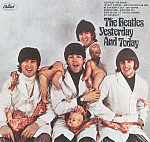 June 14, 1966 Deeming its "butcher cover" in poor taste, Capitol Records recalls the new Beatles album, Yesterday and Today, which is scheduled for release the next day and has already been sent to stores.More
 June 11, 1966 Donovan becomes the first rock star busted for drugs by the newly vigilant London drug squad.More
March 25, 1966 The Beatles show up for a photo shoot with photographer Robert Whitaker, who has butcher smocks, doll parts and raw meat waiting for them. The shoot results in their "butcher cover" photo used on the Yesterday And Today album before it is recalled.
January 23, 1966 Police arrest Jim Morrison for kissing a young woman, but the charges are really just a way for them to get to the bottom of a suspected murder that supposedly occurred weeks before.More
October 9, 1965 The Ohio State University marching band plays "Hang On Sloopy" for the first time when their football team takes on Illinois. It soon becomes an OSU favorite, and in 1985 is designated the state song of Ohio.
September 21, 1965 The Moody Blues take part in the "Pop From Britain" concert at Royal Albert Hall in London, making their first major performance. They had recently signed with The Beatles' manager Brian Epstein, who got them the gig.
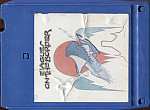 September 15, 1965 Ford offers factory-installed 8-track tape players in its Mustang, Thunderbird and Lincoln models. This marks the first time 8-track players are widely available, so you can only get the tapes in auto parts stores or Ford dealers. The players have a tendency to chew up the tapes, leading to 8-track roadkill as drivers throw the tangled tapes out their windows.More
 August 15, 1965 The Beatles play Shea Stadium in New York - home of The Mets - marking the first time a rock band headlines a stadium in America. With Beatlemania in full force, the screaming girls drown out the band in a less-than-intimate, but very memorable performance in front of a sold-out crowd of 56,000.More
August 1, 1965 Marianne Faithfull collapses during a performance in Lancashire, England, and is taken to a hospital, canceling the remainder of her tour.
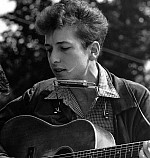 July 25, 1965 Dylan plugs in! At the Newport Folk Festival, Bob Dylan plays an electric set for the first time, horrifying folkies everywhere.More
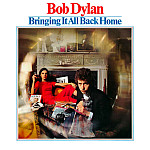 May 8, 1965 D.A. Pennebaker films Bob Dylan in one of the earliest music videos ever shot, the famous "flashcard" clip for "Subterranean Homesick Blues."More
 May 6, 1965 At a hotel in Clearwater, Florida, Keith Richards of The Rolling Stones can't sleep because there's a guitar riff running through his head. He rolls a tape, falls asleep and wakes up the next morning to find he's recorded the riff to "(I Can't Get No) Satisfaction."More
December 3, 1964 The animated TV special Rudolph The Red-Nosed Reindeer debuts on CBS, with Burl Ives as the voice of Sam the Snowman. The special is based on the 1949 song, which has become a perennial favorite.More
November 20, 1964 John Lennon acts out his own "Deaf Ted, Danoota, (and me)," taken from his recent book of whimsy In His Own Write, for later broadcast on BBC's comedy show Not Only... But Also, assisted by Dudley Moore and Norman Rossington.
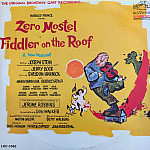 September 22, 1964 The musical Fiddler on the Roof makes its Broadway debut at the Imperial Theatre.More
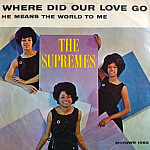 August 22, 1964 After three years without a big hit, The Supremes' "Where Did Our Love Go" hits #1 in the US, the first of five consecutive chart-toppers.More
August 11, 1964 The Who, temporarily known as the High Numbers, take the stage at Harrow, England's Railway Hotel, but not before lead singer Roger Daltrey is involved in a fistfight with his father-in-law just outside.
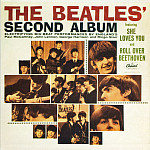 May 2, 1964 The Beatles Second Album, a collection of B-sides and sundry tracks yet to find a home in the States, goes to #1 in America, replacing their first album, Meet the Beatles!More
 February 1, 1964 Indiana Governor Matthew Walsh bans the Kingsmen's version of "Louie Louie," calling it "pornographic" and making (literally) a federal case out of it.More
©2026 Songfacts®, LLC